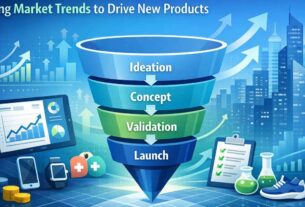

New product development drives growth by turning ideas into market-ready solutions. Teams collaborate across disciplines, validating concepts, prototyping, and refining user experiences. Strategic planning aligns customer needs with technical feasibility, reducing risk and accelerating time-to-market. For insights on processes, frameworks, and best practices, explore resources at https://forward-npd.com/. Emphasizing iterative testing, cross-functional collaboration, and clear metrics helps transform concepts into successful, scalable offerings that meet real demand.
IntroductionMarket validation is the compass of successful new product development (NPD). For organisations engaging in product development services or partnering with a product development consultant, rigorous validation reduces risk, optimises resource allocation, and increases the odds of market success. This guest post outlines practical techniques to assess product-market fit, refine value propositions, and de-risk invention through structured feedback loops. By applying these methods, a new product development company can move from concept to commercially viable offerings with confidence.
Early-market Insights and Problem Framing
Effective market validation begins with a precise articulation of the problem you are solving and who experiences it. A product development consultancy or product development outsourcing team should:
- Define user personas and critical jobs-to-be-done. Understand the underlying motivations, pains, and constraints of target customers.
- Map the value proposition to tangible outcomes. Quantify benefits such as cost savings, time-to-market improvements, or quality enhancements.
- Assess market size and growth indicators. Look for addressable markets with credible demand signals and a plausible expansion trajectory.
Techniques to gather early insights include:
- Problem interviews with potential buyers and users to surface unmet needs and priorities.
- Competitive benchmarking to identify gaps in current offerings and where your solution could differentiate.
- Quick-prototyping and concept testing to validate assumptions before substantial investment.
By framing the problem correctly, a product development consultant can align stakeholders, refine requirements, and set realistic success criteria for later validation stages.
Quantitative and Qualitative Validation Methods
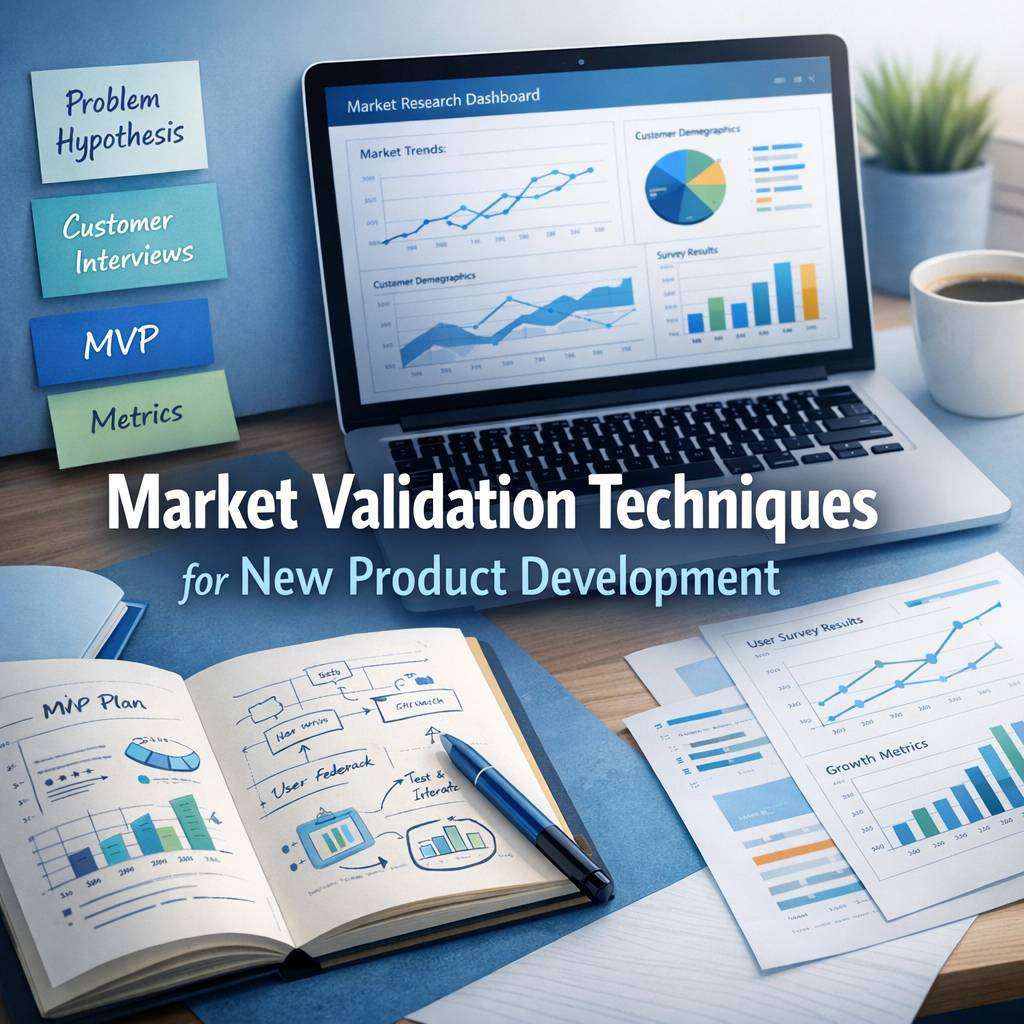
A balanced validation programme blends qualitative depth with quantitative rigour. The following methods are commonly employed by product development outsourcing providers and npd teams:
- Concept surveys and conjoint analysis: Test features, pricing, and trade-offs to understand what configurations customers value most and what price points they will tolerate.
- Landing pages and smoke tests: Create minimal, articulate pages that describe the product and capture expression of interest, pre-orders, or sign-ups. Track conversion rates and cost per acquisition to gauge demand.
- Pilot studies and beta programmes: Deploy a restricted release to a representative segment to observe real usage, adoption rates, and feedback on performance and aesthetics.
- A/B testing of messaging and positioning: Experiment with value propositions, claims, and benefit emphasises to determine which resonates best with the target audience.
- Pricing experiments: Evaluate willingness-to-pay through discrete choice experiments or tiered pricing scenarios to identify viable price bands.
Qualitative techniques complement the data:
- In-depth interviews and usability sessions: Observe how customers interact with prototypes, noting friction points and unmet expectations.
- Diary studies and ethnography: Gather longitudinal insights into how the product fits into users’ daily routines and workflows.
- Expert reviews and heuristic evaluations: Leverage panel expertise to identify potential usability or feasibility issues early.
Together, these approaches provide a robust evidence base for deciding whether to proceed, pivot, or halt development.
Refining the Offer and De-risking Investment
Validation is not a one-off exercise but an iterative process that informs product definition, go-to-market strategy, and investment plans. Key steps include:
- Value proposition refinement: Use insights from validation activities to sharpen messaging and articulate a clear, differentiating benefit stack. Ensure that the proposition addresses a measurable problem and is scalable across segments.
- Feature prioritisation and MVP design: Translate validated needs into a minimum viable product (MVP) that delivers core value while remaining technically feasible and economical. Apply prioritisation frameworks such as MoSCoW or RICE to balance user impact against effort and risk.
- Commercial viability assessment: Model unit economics, channel costs, and revenue scenarios. Confirm that the product development consultancy or npd team can deliver sustainable margins within the chosen market segments.
- Risk assessment and mitigation planning: Identify regulatory, safety, or interoperability risks early. Develop mitigation strategies and a risk register aligned with development milestones.
For organisations engaging with a product development company or a product development consultant, these activities help ensure alignment between product capability, customer expectations, and business objectives. They also provide documentation to support decisions for stakeholders and funders.
Go-to-Market Readiness and Scaling Signals
As validation matures, assess signals that indicate readiness to scale. Indicators include:
- Proven demand matched to a viable business model: Demonstrated willingness-to-pay, repeat engagement, and a stable acquisition channel.
- Clear product-market fit metrics: Adoption velocity, retention trends, and net benefits observed in real-use environments.
- Operational readiness: Manufacturing or fulfilment capabilities, supply chain resilience, and support structures that can sustain growth.
- Organisation alignment: Internal teams understand the value proposition and are equipped with repeatable processes for product development outsourcing, customer support, and sales enablement.
- Compliance and governance readiness: Established regulatory pathways, safety certifications, and data protection practices where applicable.
Involving a product development consulting partner at this stage helps codify scalable processes, transfer knowledge, and embed a culture of evidence-based decision-making within the organisation.
Practical scenarios for different engagement models
- For a new product development company exploring a radical innovation: Prioritise high-quality qualitative insights and use rapid pilots to de-risk technical feasibility. Emphasise market education in go-to-market plans.
- When working with an established firm seeking incremental improvements: Leverage existing customer data, deploy A/B tests on messaging, and validate pricing with tiered offers to optimise profitability.
- In outsourcing arrangements: Demand clear milestone-based validation gates, with predefined criteria for progression or pivot, ensuring accountability and transparent risk management.
Engaging the right mix of expertise is essential. A seasoned product development consultant or product development outsourcing partner can bring disciplined validation frameworks, access to diverse markets, and a structured feedback loop that accelerates learning and reduces time-to-market.
If you are seeking to accelerate your NPD journey, consider engaging with a credible product development consultancy or a dedicated product development services partner who can tailor validation plans to your sector and business objectives. A thoughtful validation strategy is not merely a risk-reduction exercise; it is a strategic investment in market clarity, customer alignment, and long-term competitive advantage.