
IntroductionTennis facilities demand more than just a pristine playing surface; they require careful maintenance that preserves both appearance and playability. When stains appear on tennis courts, the instinct is to grab harsh chemicals or scrub vigoursly. However, improper stain removal can damage the surface, shorten the life of artificial grass tennis courts, and compromise safety. In this expert guide, I’ll share practical, field-tested techniques for removing a wide range of stains from tennis courts, with a focus on artificial grass tennis surfaces. The methods outlined here are suitable for tennis court maintenance teams, facility managers, and enthusiastic community groups invested in long-lasting, high-quality playing surfaces.
Understanding the Surface: Artificial Grass Tennis and BeyondBefore selecting a cleaning approach, it’s crucial to understand the type of surface you’re dealing with. For artificial grass tennis, the pile fibres, backing, and underlayment respond differently to cleaners than traditional hard courts. When you know your surface is synthetic grass, you can tailor your stain removal to protect the fibres and drainage system. This is particularly important for tennis court installation projects planned for new facilities, where the longevity of the surface depends on gentle, compatible products and routines.
Identify the Stain and Choose a Safe ApproachCommon stains on artificial grass tennis courts include organic matter (leaves, berries, grass clippings), moss or algae, oil-based spills, rust stains from metal fixtures, and pigment marks from footwear or markers. To select the best approach:
- Organic stains: Start with warm water and a mild, non-ionic detergent. Avoid bleach which can degrade some carpet-backings and can dull colours over time.
- Algae and moss: A mixture of water, white vinegar, and a soft brush can be effective. For tougher growth, a specialised surfactant designed for artificial grass surfaces may be employed.
- Oil-based stains: Use a degreasing agent suitable for synthetic turf; apply sparingly and rinse thoroughly.
- Rust: A rust remover compatible with artificial grass should be used, ideally one that is safe for synthetic fibres and drainage systems.
- Pigment or marker stains: Gentle detergents or specialised stain removers designed for sports surfaces usually do the job without harming the fibres.
Prep Work: Protecting Surroundings and the Surface
- Remove loose debris: Clear leaves and litter with a soft brush or leaf blower set to a gentle setting to avoid dispersing dust into the air.
- Wet the area: Dampen the stain with clean water. This reduces fibre friction during cleaning and helps the cleaning solution to spread evenly.
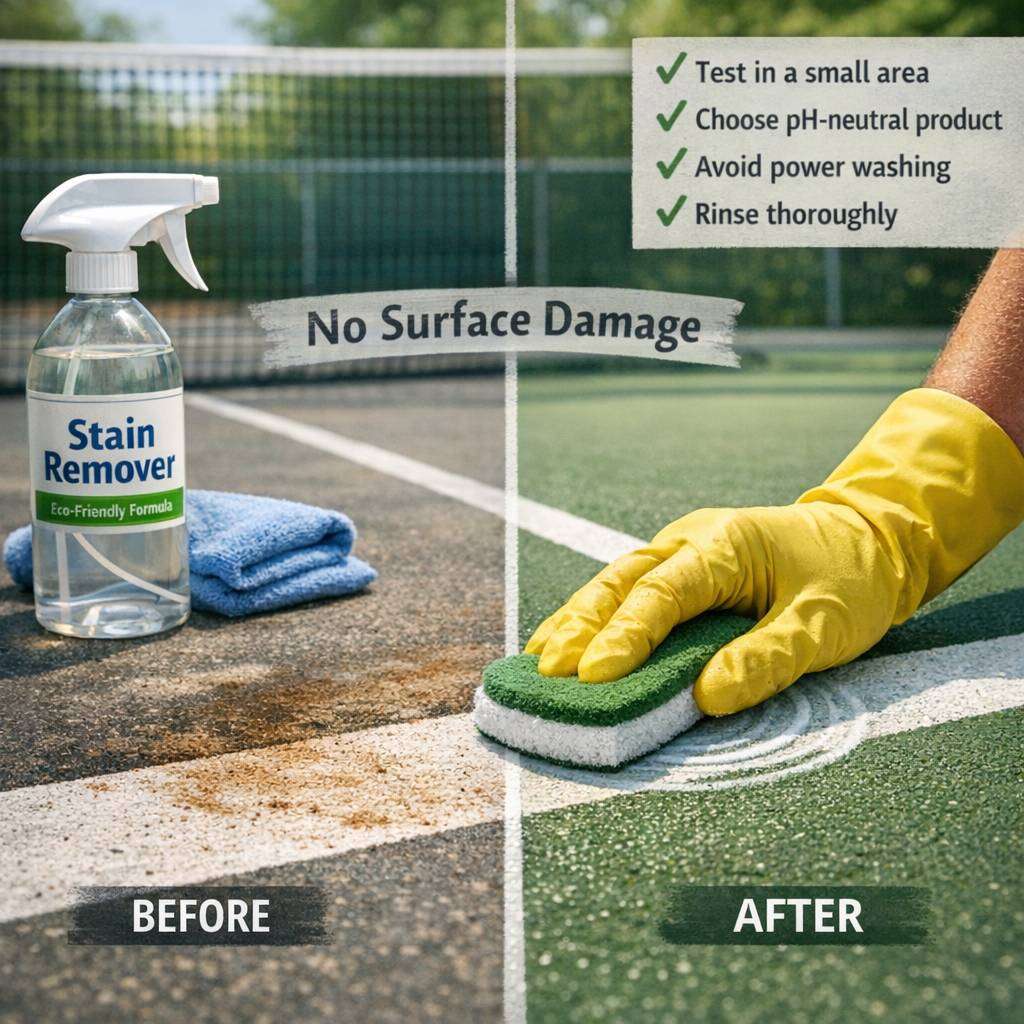
- Test a hidden spot: Always test any cleaner on an inconspicuous area of the artificial grass tennis court first to check for discolouration or adverse reaction.
- Protect drainage: Ensure drainage channels are clear before cleaning to prevent pooling, which could saturate the backing and prolong drying times.
Gentle Cleaning Techniques that Preserve the Surface
- Soft brushing: Use a nylon bristle brush to work the cleaner into the fibres. Brush in a consistent direction to minimise fibre bending and to lift stains rather than grind them deeper.
- Low-pressure rinsing: Rinse with a hose or pressure washer on a low setting. High pressure can lift or distort the pile and should be avoided on sensitive surfaces.
- Controlled dwell time: Allow cleaners to sit briefly (as per product instructions) but avoid long dwell times that could weaken backing or attract more dirt.
- Rinse thoroughly: Ensure all cleaning agents are fully rinsed away to prevent residue, which can attract fresh dirt and create a slippery surface.
Dealing with Specific Stains: Step-by-Step Tips
- Organic stains (leaves, fruit): Apply a mild detergent solution, scrub gently, rinse thoroughly, and allow to air dry. For persistent marks, repeat the process or switch to a more specialised artificial grass maintainer.
- Algae or moss: Mix equal parts water and white vinegar; spray on, let sit for 10-15 minutes, then scrub with a soft brush and rinse. For heavy growth, use a facility-approved antifungal or algaecide suitable for artificial grass tennis courts.
- Oil or grease: Blot the area to remove excess, then apply a small amount of a synthetic turf-safe degreaser. Gently agitate and rinse completely. Avoid using solvents that could degrade the backing.
- Rust: Apply a rust-specific cleaner designed for synthetic turf, following the manufacturer’s instructions. Rinse thoroughly and ensure there is no residue in drainage areas.
- Rubber or tyre marks: A mild detergent with warm water, followed by careful brushing and thorough rinsing works well. Avoid abrasive scrubbing that could dull the pile.
Frequency and Routine: Tennis Court Maintenance Best Practices
- Regular cleaning schedule: Implement a weekly light cleaning during the playing season and a deeper clean monthly, adjusting for local climate and usage.
- After heavy use or weather events: Inspect the surface for staining or residue promptly and treat as needed to prevent permanent staining.
- Drainage checks: Inspect the drainage system during tennis court maintenance to ensure water is not pooling, especially after cleaning.
- Seasonal resealing or resurfacing: Depending on wear, plan for tennis court resurfacing every 6-10 years to keep the surface in top condition and to refresh the appearance.
Product Selection: What to Look For
- Compatibility: Choose cleaners explicitly labelled for artificial grass or synthetic turf surfaces.
- pH level: Neutral pH cleaners are typically safer for synthetic fibres and backing materials.
- Round-up of protective gear: Use gloves and eye protection where appropriate, and ensure ventilation when using cleaners with stronger scents or fumes.
- Environment considerations: Opt for biodegradable, non-toxic products when possible to protect groundwater and the surrounding landscape.
Long-Term Maintenance Wisdom
- Invest in quality: A well-maintained artificial grass tennis court not only looks better but lasts longer, contributing to lower tennis court maintenance costs over time.
- Professional help: For complex stains or recurring issues, consult a tennis court cleaning and maintenance specialist. They can evaluate surface integrity, advise on tennis court resurfacing timelines, and ensure any cleaning regimen aligns with installation specifications.
- Documentation: Keep a log of cleaning activities, products used, and any observations about surface condition. This helps when planning tennis court maintenance cycles or preparing for potential resurfacing.
Final ThoughtsStain removal on tennis courts—especially artificial grass tennis surfaces—requires a patient, thoughtful approach that respects the fibres and drainage system. By choosing suitable cleaners, applying gentle techniques, and keeping up with regular maintenance, you’ll preserve the surface’s aesthetics and playability for years to come. Whether you’re overseeing tennis court installation, maintenance, or small-scale upkeep, the right routine makes all the difference in a court that remains a joy to play on and a pleasure to look at.
Tennis court cleaning is essential for maintaining optimal playability and safety on the surface. Regular debris removal, algae control, and proper drainage prevent slippery patches and equipment wear. For professional guidance, visit www.artificialgrassmaintenance.co.uk/tennis-court-installation-resurfacing to explore installation and resurfacing options. By following expert recommendations, you can extend the life of your court, preserve traction, and ensure a pristine environment for practice and competition.
Tennis court cleaning is essential for preserving surface integrity and player safety. Regular maintenance prevents mold, algae, and slippery residue that can affect ball bounce and footing. For expert tips and community recommendations, check this resource: https://pressurewashingresource.com/community/t/tennis-courts/317. Maintaining nets, lines, and surrounding areas also extends court life. Consider eco-friendly cleaning techniques, schedule seasonal deep cleans, and train staff to spot wear early. Consistency yields durable, well-playing surfaces.
Tennis court cleaning is essential for safe play, preserving surface integrity, and extending lifespan. Regular maintenance battles mold, algae, and staining while improving traction and aesthetics for players of all levels. For expert results, check this specialized service: https://clearviewwashing.com/power-washing-tennis-courts/