
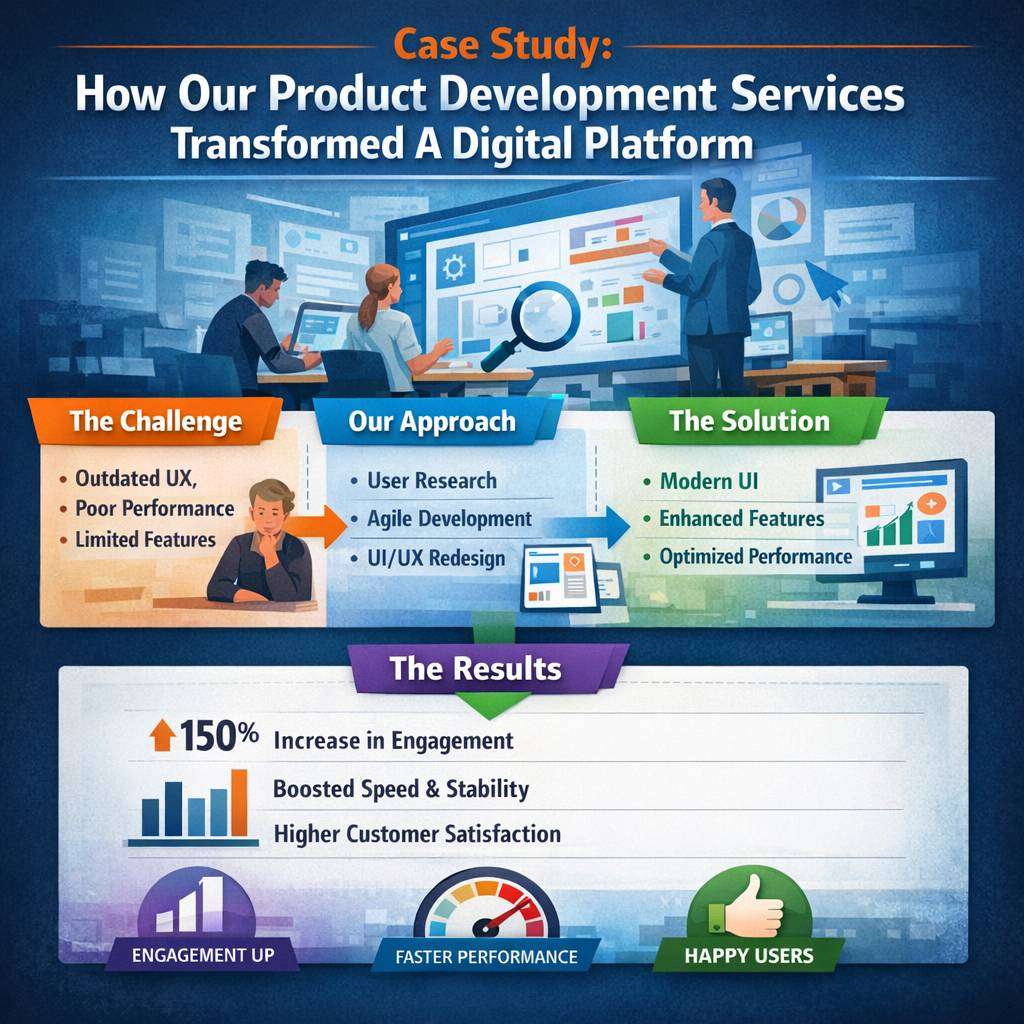
In this case study, we explore how strategic product development services, delivered by a seasoned new product development (npd) consultant team, catalysed a transformation of a mature digital platform. The engagement demonstrates how disciplined processes, user-centric insights, and technical rigour can elevate performance, user satisfaction, and business value.
Context and Challenge
The client operated a digital platform that had achieved steady traction but faced a plateau in growth. User engagement metrics were flat, and time-to-market for new features lagged behind competitors. The core challenge was a misalignment between customer needs, business objectives, and the platform’s architectural decisions. To unlock value, the client required a comprehensive approach that combined discovery, strategic roadmapping, and practical execution across product development services.
Key issues identified at the outset included:
- Fragmented feature strategy with inconsistent prioritisation
- Technical debt impeding agility and scalability
- Limited data-driven decision making and experimentation
- Insufficient alignment between product, design, and engineering teams
Approach: A Holistic, Collaborative Framework
To address these challenges, our team deployed a holistic framework that blended product strategy, design thinking, and engineering excellence. Central to the transformation was a collaborative model that integrated the client’s stakeholders with our product development consultancy team, ensuring a shared vision and accountability.
Discovery and Opportunity Mapping
- We conducted a thorough discovery phase to surface customer pain points, unmet needs, and market opportunities.
- Stakeholder workshops enabled a clear articulation of strategic priorities and success criteria.
- Output: a structured opportunity map and a validated shortlist of high-impact initiatives aligned with business goals.
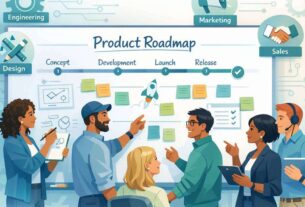
Roadmapping and Prioritisation
- A data-informed roadmap was developed to sequence initiatives across discovery, experimentation, and delivery.
- We employed prioritisation frameworks that balanced user value, technical feasibility, and time-to-market considerations.
- Output: a multi-quarter plan that guided both product strategy and engineering sprints, reducing chaos and fostering focus.
Architecture, Platform Strategy, and Technical Enablers
- We addressed technical debt while laying the groundwork for scalable growth through modular architecture, API-first design, and robust data pipelines.
- Emphasis on reusability, secure design patterns, and maintainability to accelerate future development.
- Output: an architectural blueprint and a phased implementation plan that supported rapid iterations without sacrificing stability.
Experimentation, KPIs, and Data-Driven Decision Making
- A structured experimentation framework was introduced to validate hypotheses quickly and learn continuously.
- We defined meaningful metrics, dashboards, and telemetry to monitor performance and inform decisions.
- Output: a repeatable cycle of ideation, experiment, analyse, and learn, feeding the product backlog with validated insights.
Cross-Functional Governance and Delivery
- We embedded cross-functional squads, including product managers, designers, and engineers, to improve collaboration and speed.
- Clear governance structures, rituals, and documentation reduced ambiguity and misalignment.
- Output: streamlined delivery velocity and a culture of accountability across the organisation.
Outcomes: Measurable Value Across the Platform
The transformation delivered tangible benefits across strategic, operational, and user-centric dimensions. Highlights include:
- Accelerated time-to-market: The pace of delivering new features increased by a substantial margin, with shorter feedback loops enabling faster iteration.
- Improved user engagement: Feature prioritisation aligned with user needs, driving meaningful improvements in retention and activation metrics.
- Reduced technical debt: Refactoring and modularisation lowered complexity, enabling more predictable releases and easier maintenance.
- Enhanced decision making: The introduction of a data-driven experimentation culture provided evidence-based direction for the product roadmap.
- Strengthened outsourcing and capability: The client leveraged our product development services and npd new product development capabilities to build internal competency while maintaining external support where beneficial.
Why This Case Resonates: Lessons for Product Development
This case underlines several enduring principles that underpin successful development of new products and digital platforms:
- Start with discovery that’s anchored in real user insights. A robust opportunity map guides prioritisation and sets the tone for the entire engagement.
- Align architecture with business goals. An architecture strategy that supports scalability and speed-to-delivery is pivotal to sustaining growth.
- Institutionalise experimentation. A disciplined, repeatable approach to testing ideas converts hypotheses into validated learning and tangible product improvements.
- Foster cross-functional collaboration. Breaking down silos between product, design, and engineering accelerates delivery and improves quality.
- Leverage external expertise wisely. Engaging a product development outsourcing partner or a trusted product development consultancy can accelerate capability building and mitigate risk during critical growth phases.
Product development services are essential for turning ideas into market-ready solutions. From ideation and prototyping to testing and launch, they streamline innovation, reduce risk, and accelerate time-to-market. By collaborating with experts, you gain strategic insight, user-centric design, and scalable architectures. For more information, explore https://forward-npd.com/, a resource that highlights practical approaches and industry best practices. Emphasizing iterative feedback loops and rigorous validation, product development services help businesses stay competitive and deliver compelling, revenue-generating products.
The Role of a New Product Development Consultant
As a new product development consultant, our role was to guide strategy, implement governance, and embed best practices without compromising the client’s unique business context. We acted as facilitators, prioritisers, and mentors—ensuring that every decision was informed by customer value, technical feasibility, and commercial viability. By combining strategic thinking with practical execution, we helped the client mature from a feature-focused approach to a cohesive product strategy that scales with the organisation.
This case exemplifies how a well-orchestrated programme of product development services can transform a digital platform. Through careful discovery, disciplined prioritisation, and a relentless focus on user value, the platform evolved from a satisfactory but static solution into a dynamic, competitive product that sustains growth and innovation. For organisations seeking a partner in development of new products, the integration of npd capabilities with robust product development outsourcing and consultancy can be the differentiator between incremental improvement and transformative change.