

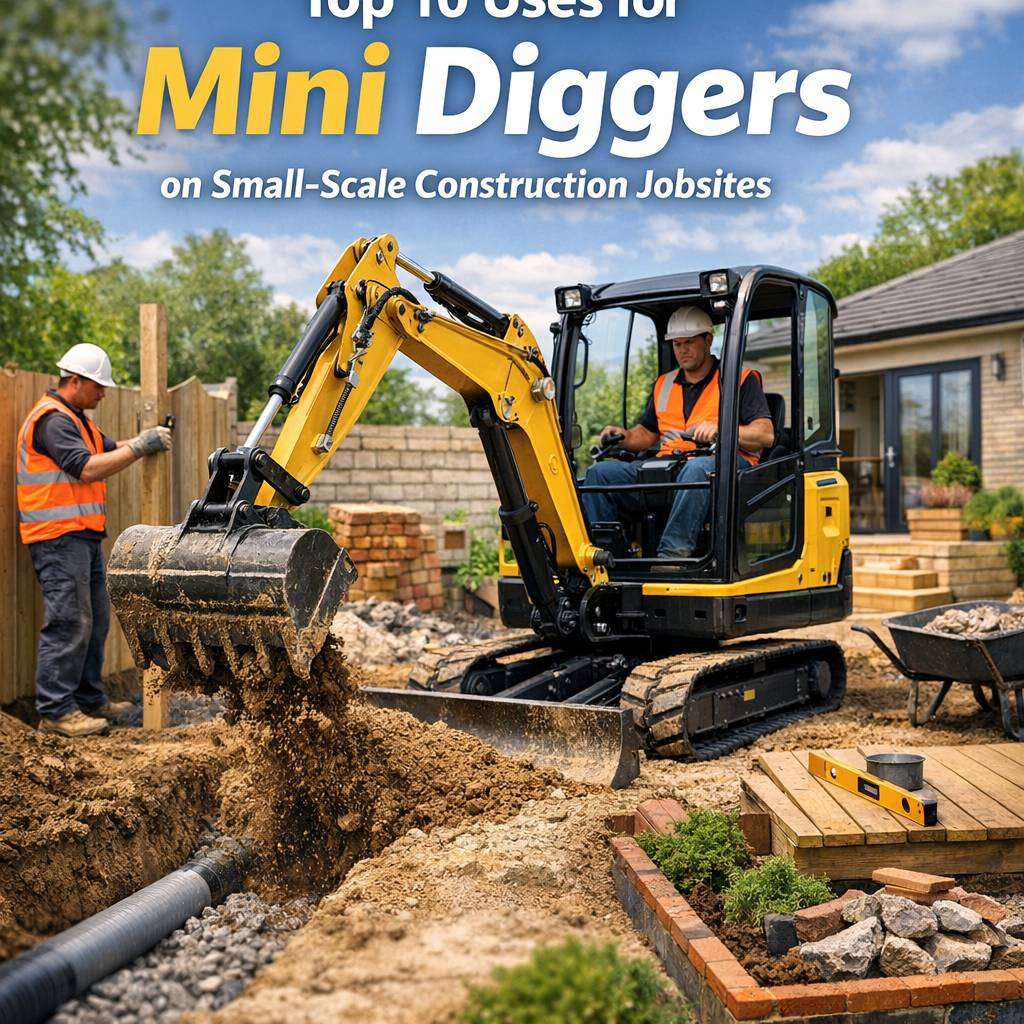
Mini diggers are the unsung heroes of small-scale construction projects. With their compact footprints, agile manoeuvrability, and increasing power, these versatile machines enable efficient work without the disruption and space requirements of larger excavators. Below, we explore the top ten uses for mini diggers on sites where space is at a premium, and precision is paramount.
Mini diggers are ideal for tight spaces, urban sites, and precise excavation tasks. These compact machines offer strong performance, operator comfort, and versatile attachments for trenching, ditching, and landscaping. When choosing a rental or purchase, consider reach, hydraulic flow, and safety features. For more options and competitive rates, visit https://www.sjhallplant.com for a wide range of mini diggers and related support.
1) Site Preparation and Ground Clearance
Before any build begins, clearing debris, roots, and surface irregularities is essential. A mini digger paired with the right attachment—such as a grapple or a rock breaker—allows for careful removal of unwanted material without over-tilling or damaging nearby structures. This initial groundwork sets a solid foundation for subsequent phases.
2) Trenching for Utilities
Small utility runs, such as electrical conduits, drainage pipes, or irrigation lines, benefit from the accuracy of a mini digger. A narrow trench can be dug quickly and consistently, reducing manual labour and the risk of hitting existing services. For tight plots, a zero-tail swing model helps maintain clearance around obstacles.
3) Foundation Preparation
Precise excavation of shallow foundations is a common requirement on compact sites. Mini diggers provide controlled depth and width, ensuring that footings align with engineering specifications. When paired with a laser level or depth gauge, operators can achieve uniform results across multiple points.
4) Landscaping and Grading
The grading capabilities of a mini digger are particularly useful for slope control, trench edging, and terracing. Operators can shape the terrain, create drainage channels, and prepare the ground for turf or paving. This is especially advantageous on tight plots where manual grading would be slow and labour-intensive.
5) Trenchless Piping and Drainage Repairs
For small drainage updates or repairs, a mini digger can be manoeuvred to access shallow pipes without excessive disruption. The right attachment, such as a mini breaker or trenching chain, enables careful extraction or installation of piping with minimal soil disturbance.
6) Demolition of Small Structures
On projects involving extensions or site refreshes, mini diggers equipped with a hydraulic breaker, shears, or a concrete crusher can tackle light demolition tasks. The compact size reduces risk to surrounding structures and limits noise and dust compared with larger machines.
7) Garden, Driveway, and Pound Surface Works
Mini diggers are ideal for constructing or resurfacing driveways, garden paths, and small retaining walls. They can excavate bed lines, remove old paving, and create level bases for new surfacing. The ability to finish with a compactor or plate, often deployed on the same site, speeds up delivery.
8) Concrete Removal and Footings Adjustment
When modifying foundations or removing old concrete slabs on restricted plots, a mini digger can break and scoop concrete efficiently. Operators can carefully remove material without compromising adjacent structures. This is particularly helpful for extensions or reconfigurations where precise material removal is essential.
9) Trench Backfilling and Compaction
After laying pipes or cables, backfilling and compaction are crucial to ensure stability. Mini diggers can move soil back into trenches, and compatible compaction attachments, such as plate compactors, enable compacting to required densities. This combination speeds up the process while maintaining quality.
10) Transportable Work Platforms and Access Lanes
Some mini diggers come with or can be paired with accessories that facilitate limited access platforms or temporary access lanes for other trades. In tight sites, you can create safer pathways for electricians, plumbers, or finishing trades without moving large equipment around repeatedly.
Our mini diggers deliver precise performance for tight spaces, making site access and maneuverability effortless. With enhanced hydraulics, low-tail swing, and solid stability, these compact machines handle tasks from trenching to site prep. Our rental options ensure reliable uptime and flexible terms to fit project momentum. For more details, visit https://kobelco-usa.com/excavators/excavators/north-america/mini-excavators/sk35sr-7-canopy. Explore how mini diggers can boost productivity on your next job.
Selecting the Right Mini Digger for Small-Scale Jobs
When choosing a mini digger for sale or considering used mini diggers, several factors influence suitability:
- Size and reach: Measure the working radius and height to ensure it fits through gates and into confined spaces. Zero-tail swing models are particularly advantageous for tight corners.
- Power and hydraulics: Verify horsepower and hydraulic flow to match the attachments you plan to use, such as buckets, breakers, or grapples.
- Operational controls: Ergonomic, intuitive controls reduce operator fatigue on longer days and improve precision.
- Stability and weight: A lighter machine is easier to transport between sites, but ensure it has enough ballast to prevent tipping during trenching or excavation.
- Attachments compatibility: Confirm that the mini digger supports the attachments you rely on, including trenching attachments, augers, and ground-engaging tools.
For buyers, exploring options like mini diggers for sale from reputable dealers is wise. If budget is a consideration, used mini diggers can provide substantial savings, especially when sourced from certified resellers who offer service histories and inspection reports. Always request maintenance records, known issues, and a recent test run to avoid costly surprises post-purchase.
Best Practices for Maximising Efficiency on Small Sites
- Plan a workflow that minimises machine repositioning. Map out trench lines and excavation areas before starting.
- Choose the correct attachment for the task. A bucket is versatile, but a trenching bucket, breaker, or grapple can dramatically improve productivity.
- Maintain a clear work area. Small sites can quickly become congested; keep pedestrian pathways and machinery routes well-marked.
- Schedule regular maintenance and pre-use checks. A well-maintained mini digger reduces downtime and extends the life of the equipment.
- Train operators in precise handling. Small-scale jobs demand accuracy; ensure operators understand depth markers, slope grading, and safe operation around utilities.
Mini diggers deliver power and precision in environments where space is limited and requests for versatility are constant. Whether you’re preparing foundations, laying utilities, or performing light demolition, these compact machines provide a practical solution that reduces both labour time and site disruption. For teams weighing their options, considering both mini diggers for sale and used mini diggers from trusted suppliers can offer a balance of capability and cost, tailored to the demands of small-scale construction jobsites.