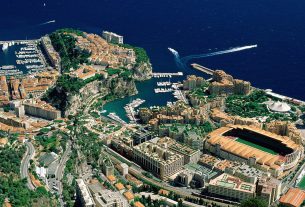

Residency in Monaco
Monaco offers a unique residence landscape that attracts many international professionals, financiers, and retirees. This section outlines the overarching framework of residency in Monaco, including who may apply, the typical pathways, and the key expectations set by the principality’s authorities. Prospective residents should recognise that Monaco does not grant full citizenship through naturalisation, and residency is subject to strict criteria, financial thresholds, and proof of genuine ties to the principality.
Monaco Residency Requirements
To obtain residency in Monaco, applicants generally must demonstrate significant financial means and a legitimate reason to reside in the principality. Typical requirements include:
- Proof of accommodation in Monaco (rental contract or property ownership).
- Demonstrable financial resources sufficient to support oneself and dependants without recourse to public funds.
- A clear purpose for residing, such as employment, business activity, or retirement plans.
- A police clearance certificate and medical insurance.
- A declaration of the intended duration of stay and residency plan.
The process is often conducted via a two-step approach: first, establishing a viable basis for residency (such as employment or investment), and second, submitting the formal application to the relevant Monaco authorities. Applicants should be prepared for an extensive documentation package and potential interviews or visits to Monaco as part of the due diligence process.
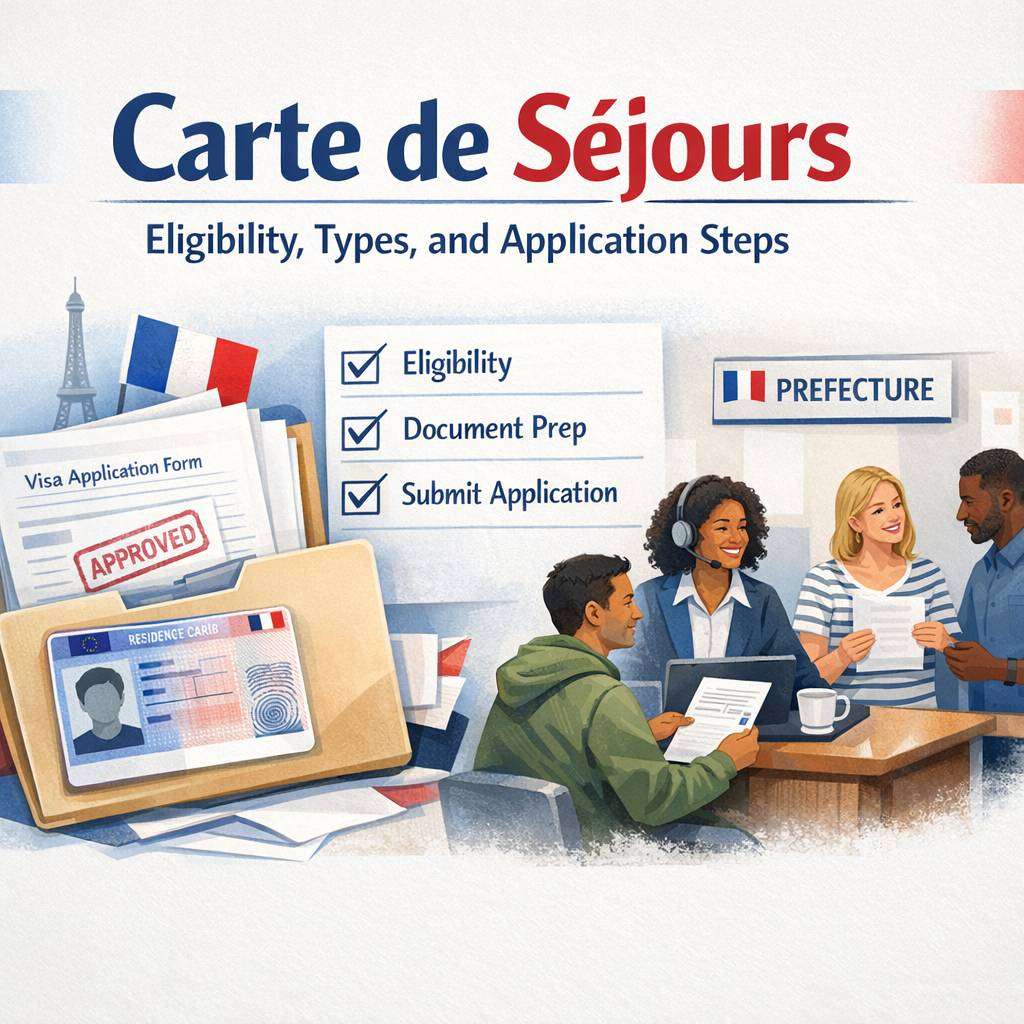
FAQ: Carte de Séjour
What is a carte de séjour?
A carte de séjour is a residence permit issued by French authorities that authorises a non-EU citizen to live in France for a specified period, often with conditions based on the purpose of stay (work, studies, family, asylum, etc.).
Who needs a carte de séjour?
Most non-EU nationals who plan to stay in France for more than 90 days, or whose visa requires a residence permit, will need a carte de séjour. Citizens of EU/EEA/Swiss countries do not.
What types of carte de séjour are available?
Types vary by purpose, including:
- Salarié or salarié détaché (employee)
- Étudiant (student)
- Vie privée et familiale (private and family life)
- Travailleur temporaire (temporary worker)
- Commerçant/entrepreneur (business owner)
- Passeport talent (talent passport)
- Asile et protection subsidiaire (asylum and subsidiary protection)
- Carte bleue européenne (EU Blue Card)
How do I apply for a carte de séjour?
Steps typically include:
- Determine the correct residency permit type for your situation.
- Gather required documents (valid passport, photos, proof of address, financial resources, health insurance, etc.).
- Submit your application at the appropriate prefecture or online portal.
- Attend any required appointments or interviews.
- Receive a receipt and, later, the decision (and potentially a temporary residence permit).
What documents are usually required?
Common documents include:
- Valid passport and copies
- Passport-sized photos
- Proof of address in France
- Proof of income or financial resources
- Health insurance coverage
- Birth certificate or antecedentes (translated if needed)
- Specific documents tied to the permit type (e.g., work contract, school enrollment)
How long does the process take?
Processing times vary by permit type and prefecture, ranging from a few weeks to several months. It’s important to apply well before your current visa or status expires.
Can I renew my carte de séjour?
Yes. Most permits can be renewed before or shortly after expiration. Renewal requires updated documents, updated photos, and often proof of continued eligibility (employment, study, family ties, etc.).
Can I work with a carte de séjour?
Many types of carte de séjour allow work, but some are restricted to certain activities or require a separate work authorisation. Check the specific category you are applying for.
Do I need an appointment to submit my application?
Yes, most prefectures require an appointment. Availability varies; book as early as possible. Some steps may be completed online.
How do I track my application?
You will receive a receipt or number to track status online through the prefecture’s portal or the official government site. Check for updates on processing times.
What happens after my application is approved?
You will receive a residence permit card or a temporary residence permit and a residence card validity date. You may need to collect the card in person at the designated location.
Can I travel outside France while my application is pending?
Travel can be restricted. Some applications permit limited travel, while others require a valid visa or temporary permit for re-entry. Check the guidance from the prefecture.
Do I need a visa in addition to a carte de séjour?
If you are already in France, the carte de séjour may replace the visa for staying long-term. However, initial entry into France may still require a long-stay visa depending on your country of origin and permit type.
What if my situation changes (e.g., job, address, family status)?
You must inform the relevant prefecture or authorities and may need to update or renew your carte de séjour accordingly. Change of status can affect eligibility.
Where can I get help with my application?
- Local prefecture or immigration offices
- Legal aid organisations or non-profits specialising in immigration
- Official government websites and helplines
- Immigration lawyers or consultants (ensure they are reputable)
Is language support available during the process?
Some offices provide assistance in multiple languages, and interpreters can be arranged. It’s helpful to bring a bilingual friend or hire a translator if needed.
What are common reasons for application denial?
- Insufficient or fraudulent documents
- Ineligibility for the chosen permit category
- Failure to meet financial requirements
- Past legal or immigration issues
- Incomplete application
How can I prepare a strong application?
- Gather all required documents and translations
- Ensure accuracy and consistency of information
- Provide clear proof of purpose (employment contract, school enrollment, etc.)
- Include all requested forms and photos
- Double-check deadlines and appointment dates
If you’d like, I can tailor this FAQ to a specific country or to a particular type of carte de séjour (e.g., student, employee, family).
Obtaining your carte de sejour can streamline residency processes and ensure smoother daily life in your new location. This essential document often unlocks access to housing, healthcare, and employment opportunities, while also clarifying your legal status for local authorities. Prospective applicants should prepare visas, photos, and supporting evidence, then consult official guidelines for timelines and requirements. For detailed assistance, visit the resource below in the second half: carte de sejours.
Monaco Residency Rules
Monaco’s residency rules are characteristically stringent. They prioritise:
- Economic contribution: Individuals typically must demonstrate that their presence benefits Monaco economically, whether through job creation, investment, or entrepreneurship.
- Genuine residence: Applicants should intend to live in Monaco for the majority of the year and maintain a residence there.
- Compliance: Residents must comply with local laws, tax obligations where applicable, and social obligations, depending on personal circumstances.
It is important to note that Monaco does not levy personal income tax on residents for most individuals, which is a significant incentive. However, the country’s residency framework is designed to ensure that those who claim residency have substantial ties to the principality and will contribute to its economy and society.
What is a Residency Permit
A residency permit is the official document that confirms an individual’s lawful right to reside in Monaco for a specified period. In practice, there are several forms of residency status, including temporary and longer-term permits. The permit is typically issued after a successful assessment of eligibility, review of submitted documents, and, in many cases, a residency interview or tour of the applicant’s intended living arrangements. A residency permit may be renewable, subject to ongoing compliance with the rules and continued demonstration of economic or personal ties to Monaco.
Apply for Residency
Applying for residency in Monaco involves careful preparation and a structured submission. Key steps include:
- Determining the most appropriate residency route (employment-based, investor, or retiree).
- Securing suitable accommodation in Monaco and obtaining a lease or property deed.
- Gathering comprehensive documentation: identity documents, financial statements, proof of accommodation, health insurance, and a clean legal record.
- Submitting a formal application to the competent Monaco authorities, often via a designated prefecture or government office responsible for residency matters.
- Attending interviews or site visits if required, and responding promptly to any additional information requests.
- Awaiting a decision, which may take several months given the thorough vetting process.
Applicants should engage with a qualified advisor or legal professional specialising in Monaco residency to navigate nuanced requirements, ensure compliance with local administrative practices, and optimise the likelihood of success.
Permanent Residency Countries
For many, the concept of permanent residency is associated with broader immigration networks and bilateral agreements. While Monaco is a microstate with its own stringent residency regime, individuals may also consider their options in other permanent residency countries as a parallel or alternative path. This section examines comparative considerations, such as:
- How permanent residency countries differ in terms of eligibility criteria, tax regimes, and path to long-term status.
- The potential for dual residency interests and how Monaco’s rules interact with other jurisdictions.
- Planning strategies that align Monaco residency aspirations with longer-term residency goals elsewhere, should the applicant seek multiple residency options.
Monaco Residence
Establishing Monaco residence entails asserting the intent to live in the principality and adhering to local norms, including social integration and adherence to civil obligations. A successful Monaco residence status typically reflects:
- A stable living situation within the principality.
- Consistent economic activity, whether through employment, entrepreneurship, or investment.
- Regular presence in Monaco, fulfilling the reasonable expectation of continued residence.
Applicants should address practical considerations such as language, culture, and logistics to foster a sustainable residence experience.
How to Demonstrate Eligibility
Eligibility demonstration is pivotal to the application process. Useful strategies include:
- Compiling a coherent narrative: articulate a credible plan for living and contributing to Monaco.
- Showcasing financial resilience: provide verifiable assets, income streams, and proof of stable funding for ongoing residency costs.
- Providing robust documentation: all documents should be current, translated if necessary, and properly certified.
Common Pitfalls and Tips
- Incomplete documentation: ensure every item requested by authorities is provided and clearly organised.
- Ambiguity about intent: present concrete plans for residence, including housing and daily life integration.
- Delays in processing: start early and maintain regular contact with the relevant offices to monitor progress.
Summary
Carte de Séjours, or a residency permit, represents a carefully regulated route to establish a legal presence in Monaco. By understanding Monaco residency requirements, mastering the residency rules, and following a structured application process, prospective residents can navigate the journey with greater clarity and confidence. Whether pursuing monaco residency for professional reasons, investment opportunities, or retirement, aligning preparation, documentation, and intent is essential to achieving a successful outcome.
A carte de sejour is a fundamental document for foreign residents, enabling lawful stay and access to essential services. It reflects residency status, work permissions, and social benefits, providing stability in a new country. For expatriates seeking guidance, understanding the application steps, required materials, and timelines is crucial. This process can be complex, but clear information helps. For more detailed support, visit: https://www.relocation-monaco.com/. This resource offers practical advice and tailored assistance for diverse relocation needs.