
Buying used plant can be a smart way to maximise your project’s value, but it requires a careful approach. This guide is written from the perspective of an expert and aims to help you navigate used plant sales in the UK with confidence. By understanding what to look for and what questions to ask, you can avoid common pitfalls and secure reliable equipment that fits your needs and budget.
When engaging in used plant sales UK, you’re balancing cost with potential risk. This checklist is designed to cover the core areas—from documentation and history to current condition and future maintenance—so you can make an informed decision. Whether you’re purchasing used plant machinery for a single project or building a fleet for ongoing work, the right diligence will pay dividends in performance and uptime.
Documentation and history
Begin by verifying the legitimacy of the seller and the provenance of the machine. Ask for:
- The equipment’s serial number, make, model, and year of manufacture.
- A full maintenance history, including last service date, lubricant changes, and replacement parts.
- Proof of ownership and transfer documents to ensure there are no liens or outstanding finance.
- Records of any accidents or major repairs, and whether the machine has ever been de-rated or restricted in operation.
- Original handbooks, schematics, and diagnostic manuals, along with any manufacturer recalls or service advisories.
Access to a well-maintained logbook or service history is invaluable when evaluating used plant sales UK. When possible, request a recent independent inspection or third-party report to corroborate the seller’s claims.
Visual inspection and exterior condition
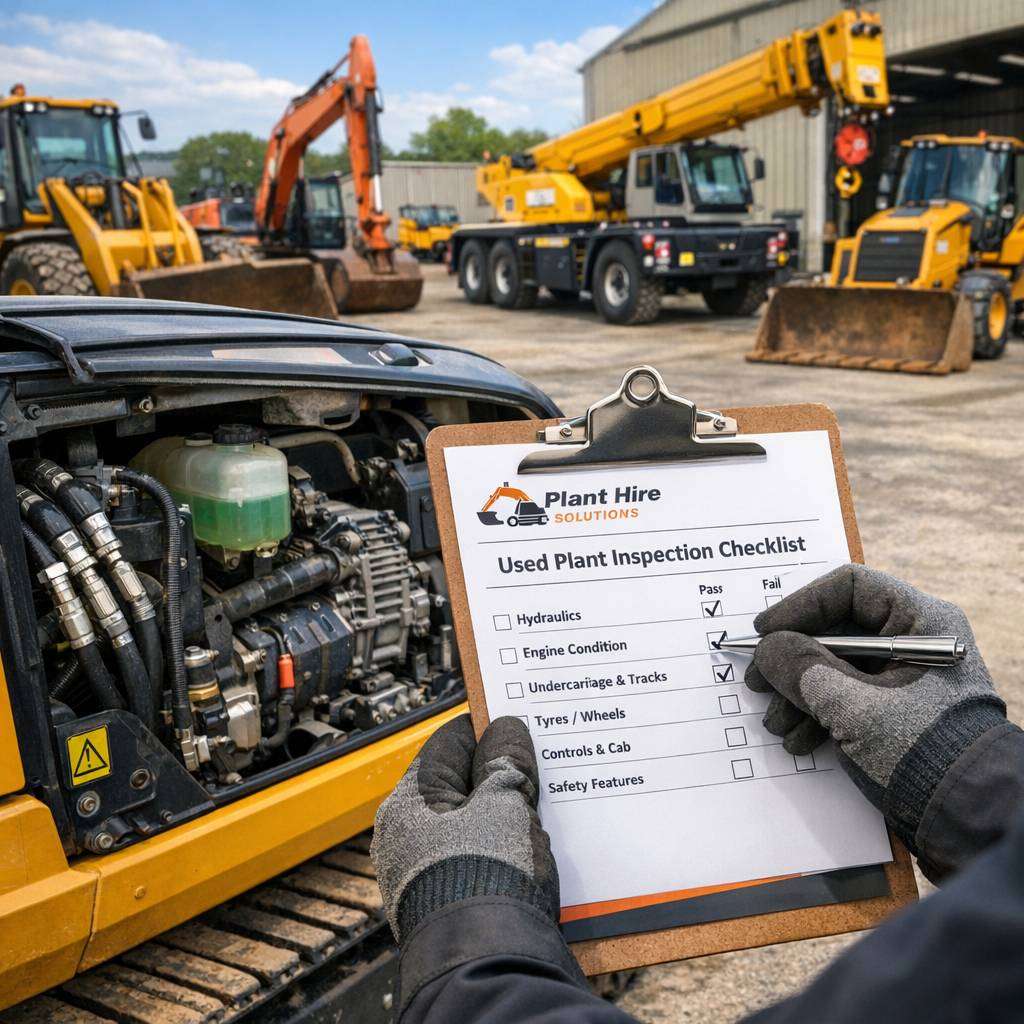
A thorough visual inspection can reveal telltale signs of wear or hidden problems. Focus on:
- Overall wear: check for rust, corrosion, and frame damage on steel structures. Look for bending, cracks, or weld repairs that could signal past impacts.
- Undercarriage and tyres: inspect for uneven wear, cracks, and the condition of track pads or rollers. For wheeled equipment, assess tyre tread depth and sidewall integrity.
- Hydraulic components: examine hydraulic rams, hoses, and fittings for leaks, cracks, or soft spots. Leaks can indicate deteriorating seals or pressure issues.
- Electrical and controls: test lights, gauges, switches, and safety interlocks. Look for frayed wiring or corrosion in connectors, which can cause intermittent faults.
- Cab and operator environment: ensure visibility and access are clear, controls are intuitive, and there’s adequate ventilation and heating. A crabbed or damaged cabin can indicate abuse or neglect.
Document any cosmetic defects, but remember that some paint wear may simply reflect normal use. Distinguish between surface marks and structural concerns.
Engine and powertrain assessment
The engine is the heart of most plant machinery, and its condition heavily influences reliability and running costs. Look for:
- Engine hours and utilisation: compare hours against typical duty cycles for that model. Excessive idle hours can indicate inefficient use or poor maintenance.
- Start-up behaviour: note any smoke, unusual noises, or smoke colour on start-up, which can signal oil issues, fuel problems, or cooling concerns.
- Fuel system integrity: inspect fuel lines for leaks, check the air and fuel filters, and assess fuel consumption patterns recorded during a test run.
- Cooling system: look for radiator damage, coolant leaks, and fan operation. Overheating in the past can shorten engine life.
- Exhaust and emission controls: check for exhaust leaks, unusual tones, and ensure any required emissions components are present and compliant.
If possible, arrange a running test to observe idle stability, power delivery, and shifting (for transmission-based machines). Listen for abnormal noises and watch for smoke or overheating, and verify that the engine warning lights behave as expected.
Transmission and hydraulics
For many plant machines, the transmission and hydraulic systems are critical for performance and efficiency. During inspection:
- Transmission response: test gear changes, forward and reverse operation, and any slipping or lag.
- Hydraulic pressure: check for consistent pressure readings and smooth operation of hydraulic functions. Leaks or drops in pressure can indicate worn seals or pump issues.
- Stabilisation and boom/arm movement: on lifting or digging equipment, verify smooth, precise movements without hesitations or jerks.
- Filtration and fluid quality: review hydraulic fluid colour, smell, and evidence of contamination. Old or degraded fluid can degrade performance and cause accelerated wear.
Safety systems and operator controls
Safety is non-negotiable in plant machinery. Confirm:
- ROPS/FOPS compliance and the presence of protective guards.
- Emergency stop and safety interlocks functioning correctly.
- Limit switches, overload protection, and anti-stall systems working as designed.
- Seat belts, mirrors, and visibility aids in good condition.
- All controls are calibrated and return to neutral or safe states when released.
Electrical, electronics, and diagnostics
Modern plant often includes onboard diagnostics and telematics. Check:
- The diagnostic software is up to date and compatible with the machine’s ECU.
- Telematics data access and history, including utilisation, hours, and fault codes.
- Battery condition, charging system, and electrical grounding.
- Display panels, sensors, and data port accessibility for maintenance or future monitoring.
Maintenance history and serviceability
A well-documented maintenance regime is a strong predictor of reliability. Look for:
- Recent major service items: timing belts, water pumps, filters, and lubricants.
- Replacement parts: genuine manufacturer parts are preferable, but high-quality equivalents can be acceptable if they meet OEM specifications.
- Accessibility of spare parts and nearby service support for used plant sales UK.
- Maintenance intervals and shop labour rates if you intend to service in-house or through a contractor.
Usage suitability and capacity planning
Ensure the machine matches your project requirements:
- Load capacity and reach: verify that performance specs align with job demands.
- Operating weight: confirm suitability for site access, ground conditions, and other equipment on site.
- Working envelope and cycle times: assess whether the machine’s speed and efficiency meet project calendars.
- Attachments compatibility: ascertain whether the equipment will operate with the attachments you need, and whether those attachments are included or available separately.
Verification and due diligence
Before committing to used plant sales, perform:
- A test run on-site or in a controlled environment to confirm condition and performance.
- A verification of the machine’s history against the seller’s stated background.
- A requested pre-purchase inspection by a qualified technician or authorised dealer.
- A clear written agreement detailing included components, warranties, and any after-sale support.
After-sales and warranty considerations
Used plant sales can be safeguarded by warranties or service packages. Inquire about:
- Length and scope of warranty, coverage limits, and what is excluded.
- Availability of warranty transfer and any required inspections post-purchase.
- Optional service contracts, on-site support, and parts availability.
Final checklist and decision-making
Compile your findings into a concise report, highlighting:
- Critical defects or red flags and estimated repair costs.
- Overall suitability for your project timeline and budget.
- Total cost of ownership, including transport, commissioning, and ongoing maintenance.
- Confidence in the seller’s transparency and the machine’s documented history.
This structured approach to used plant and machinery evaluations helps you navigate used plant sales UK with assurance. By prioritising documentation, mechanical condition, safety systems, and long-term maintenance, you can make an informed decision that aligns with your project goals and financial plan.
Looking for used plant for sale? Explore our diverse range of pre-owned machinery, inspected, serviced, and priced to move. https://www.sjhallplant.com Find reliable options for construction projects today and maximize uptime. Reliable used plant for sale solutions await.